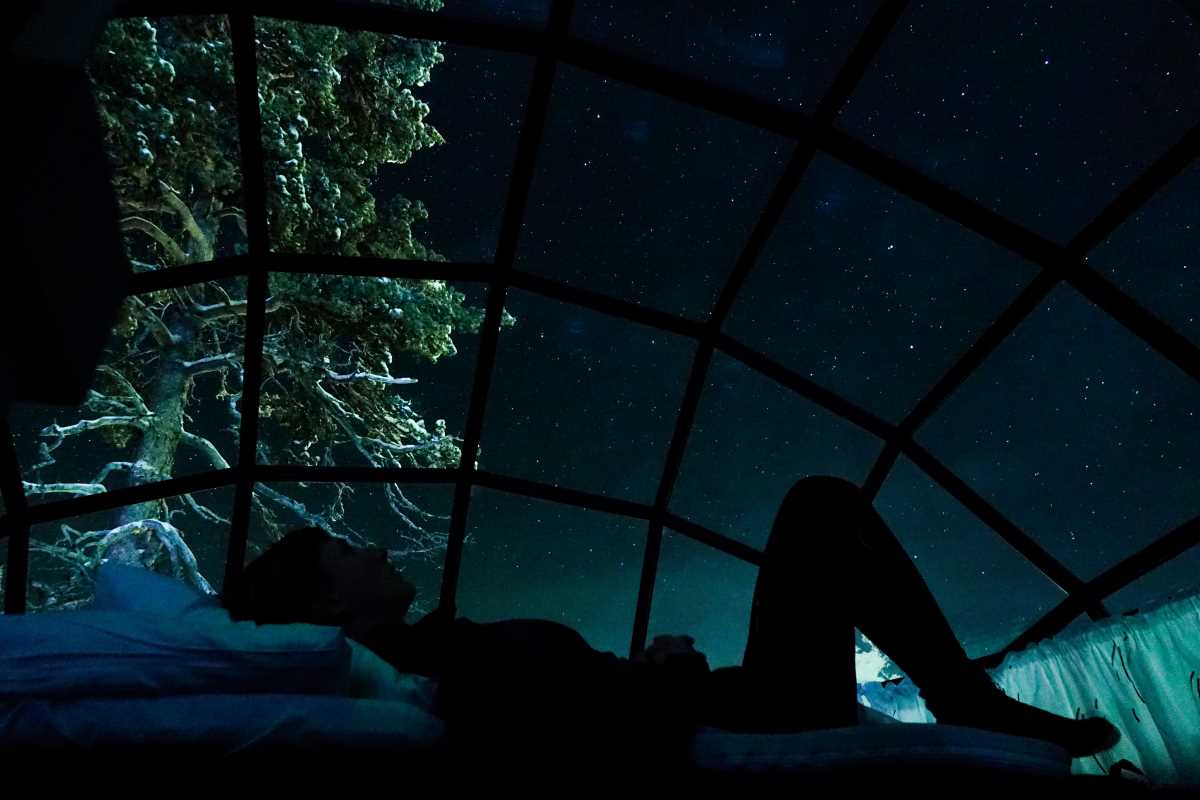
 (Image via
Can you imagine relaxing in a cozy, warm bed with the sky above alive with dancing colors? In the comfort of your own glass-roofed retreat, this magical experience comes true. These inventive accommodations offer sweeping views of the night, letting you watch nature’s dazzling light display from your private hideaway. Staying here blends the wild allure of northern landscapes with the comforts of modern life, creating a captivating escape. This guide highlights some of the finest places to enjoy a night under the shimmering auroras, along with tips to help you make the most of this unforgettable journey. Your personal window to the wonders above is closer than ever!
What Are Glass Igloos?
These remarkable structures are crafted to maximize your chances of seeing the northern sky. Instead of using blocks of ice, they feature a curved or fully transparent roof made with specially engineered glass. A gentle heating system built into the glass keeps frost and snow at bay, so your view remains unobstructed through even the coldest nights. Thanks to this clever design, you can relax in warmth and comfort inside, gazing out at the open sky all around you.
Many of these unique lodgings focus on both comfort and style. Inside, you’ll find inviting beds, private bathrooms, and dependable heating. Some higher-end spots even provide extras like kitchenettes or a private sauna. Originally developed in Finland, this style of accommodation has become popular across the Nordic region, giving guests an exciting way to embrace the colder climate without giving up convenience. The blend of cozy interiors with sweeping outdoor views has made these stays a favorite for honeymooners, couples on romantic trips, and anyone looking to tick something special off their travel list.
Understanding the Northern Lights
The aurora borealis, also known as the northern lights, creates stunning colors overhead, most visible in Arctic and sub-Arctic areas. This breathtaking event happens due to charged solar particles that travel with the solar wind and strike atmospheric gases. Their collisions release energy as vibrant lights, with shades that shift depending on altitude and which gases are present. Green and yellow tones are usually from oxygen, while blue and purple-red glows come from nitrogen.
Several conditions influence how clearly you’ll see the aurora. High solar activity can cause brighter, livelier displays. Darkness is a key factor, making late September through early April the best season in high-latitude regions. Clear skies matter too because cloud cover can block your view. Being in the right place is vital; areas within the “auroral oval” across northern Scandinavia, Iceland, Canada, and Alaska offer the most reliable sightings.
- Geomagnetic Activity: The strength of the solar wind determines the intensity of the aurora. More activity means a brighter and more dynamic display.
- Darkness: The sky must be dark to see the lights. This is why the best viewing season is from late September to early April when the nights are long.
- Clear Skies: Cloud cover will obstruct the view, so clear weather is essential.
- Location: The best viewing spots are within the "auroral oval," a zone that covers northern parts of Scandinavia, Iceland, Canada, and Alaska.
Top Destinations for Glass Igloo Stays
If you’re dreaming of an unforgettable overnight experience, Northern Europe has plenty of options to inspire you. Some of the most remarkable accommodations for watching the auroras are found in this region, each offering its own enchanting twist on stargazing and winter comfort.
Finland: The Original Glass Igloo Destination
Finland pioneered this innovative lodging, and today it stands as the top choice for experiencing these clear-roofed cabins. The snowy expanse of Finnish Lapland offers a breathtaking setting, making it ideal for those hoping to witness the aurora’s glow.
- Kakslauttanen Arctic Resort: This is the iconic resort that started it all. Located deep in the Arctic Circle, Kakslauttanen offers both small and large glass igloos. Guests can also enjoy other Arctic activities like reindeer safaris, husky sledding, and snowmobiling. The resort's remote location minimizes light pollution, maximizing your chances of seeing a spectacular show.
- Levin Iglut: Perched on a fell with breathtaking panoramic views, Levin Iglut offers luxury glass igloos near the popular Levi ski resort. Each igloo is equipped with premium amenities, making for a truly comfortable stay. The hillside location provides an elevated vantage point for watching the aurora dance over the landscape.
Norway: Coastal and Mountain Views
Norway’s sweeping fjords and rugged peaks set the stage for unforgettable aurora sightings.
- Lyngen North: Situated on the shores of the Lyngenfjord, this resort offers glass igloos with incredible views of the sea and the Lyngen Alps. The coastal location sometimes provides milder temperatures than inland areas. In addition to watching the lights, you can join whale-watching tours or go snowshoeing in the surrounding mountains.
- Tromsø Ice Domes: Located outside the city of Tromsø, often called the "Gateway to the Arctic," this destination features a hotel made entirely of ice and snow, along with unique aurora camping options. While not traditional igloos, their modern cabins and domes offer great views and a complete Arctic experience, including husky sledding and guided northern lights tours.
Sweden: Serenity in Swedish Lapland
Swedish Lapland stands out for its untouched landscapes and calming vibe, providing an inspiring place to enjoy a night in these unique accommodations.
- ICEHOTEL 365: While famous for its hotel made of ice, ICEHOTEL in Jukkasjärvi also offers warm accommodation options with excellent sky-gazing opportunities. Its location, 200 km north of the Arctic Circle, is ideal for aurora viewing. You can combine your stay with ice sculpting classes or a dog sledding adventure on the frozen Torne River.
- Aurora Mountain Lodge: This cozy lodge near the border of Norway offers glass-roofed cabins designed for northern lights viewing. The lodge provides a remote and intimate setting, far from any city lights. It’s a great place to connect with nature and enjoy the tranquility of the Arctic.
Planning Your Trip
Experiencing the aurora in a glass igloo takes a bit of planning ahead. These helpful pointers will set you on the right path:
- Book in Advance: Glass igloos are incredibly popular and often book up a year or more in advance, especially during the peak season (December to February). Plan ahead to secure your spot.
- Choose the Right Time: The best time to see the northern lights is between late September and early April. The nights are longest during the winter months, offering more hours of darkness for viewing.
- Pack Warmly: Even though you'll be warm inside your igloo, you will need proper winter clothing for any outdoor activities. Pack thermal base layers, wool sweaters, insulated and waterproof outerwear, warm hats, gloves, and sturdy winter boots.
- Be Patient: The northern lights are a natural phenomenon and their appearance is never guaranteed. It's best to plan a stay of at least three to four nights to increase your chances of a successful viewing. Use your time to enjoy other fun winter activities.
Spending a night in one of these extraordinary accommodations is about more than simply booking a place to sleep; it’s a truly immersive adventure that brings you closer to the magic of the north. Gazing up at a sky alive with stars and shifting colors is a moment you’ll never forget.