 (Image via
There’s a special kind of magic when water turns to ice in winter, transforming familiar scenes into dazzling, otherworldly displays. Waterfalls, once flowing freely with immense power, become spectacular frozen sculptures of blue and white ice. These motionless cascades create a landscape that feels pulled from a dream, with thick, dagger-like icicles and shimmering crystalline sheets suspended in midair as if time itself has stopped. For anyone who loves adventure or simply marvels at nature's artistry, seeing one of these winter wonders up close is a memory that stays with you. In this guide, you’ll explore some of the most impressive examples both in the dramatic landscapes of Iceland and across the globe. Prepare to be inspired by these uniquely beautiful sights on your next cold-weather journey.
The Unique Beauty of Iceland's Frozen Falls
Iceland, often called the "Land of Fire and Ice," offers some of the planet’s most breathtaking cascades. When winter arrives, these natural wonders are transformed into mesmerizing displays of ice and snow. Here are a few sights that truly stand out and are sure to make any trip unforgettable.
Gullfoss
Gullfoss, known as the "Golden Falls," stands out as one of Iceland's most recognized natural wonders and is a highlight along the Golden Circle journey. During summer, visitors see its dramatic, two-level flow in full force. When winter arrives, it turns into an icy spectacle.
- Winter Transformation: While sections of the rushing water may continue to cascade, the borders of Gullfoss transform into massive, wave-like ridges of ice. The constant spray blankets nearby cliffs and walkways in a thick sheet of frost, creating a sparkling, surreal landscape.
- Visiting Tips: The terrain can be extremely slick, so bringing crampons or microspikes for your footwear is crucial for staying steady. Some lower lookouts may not be accessible due to safety concerns, but the upper platforms continue to provide fantastic vantage points.
Skógafoss
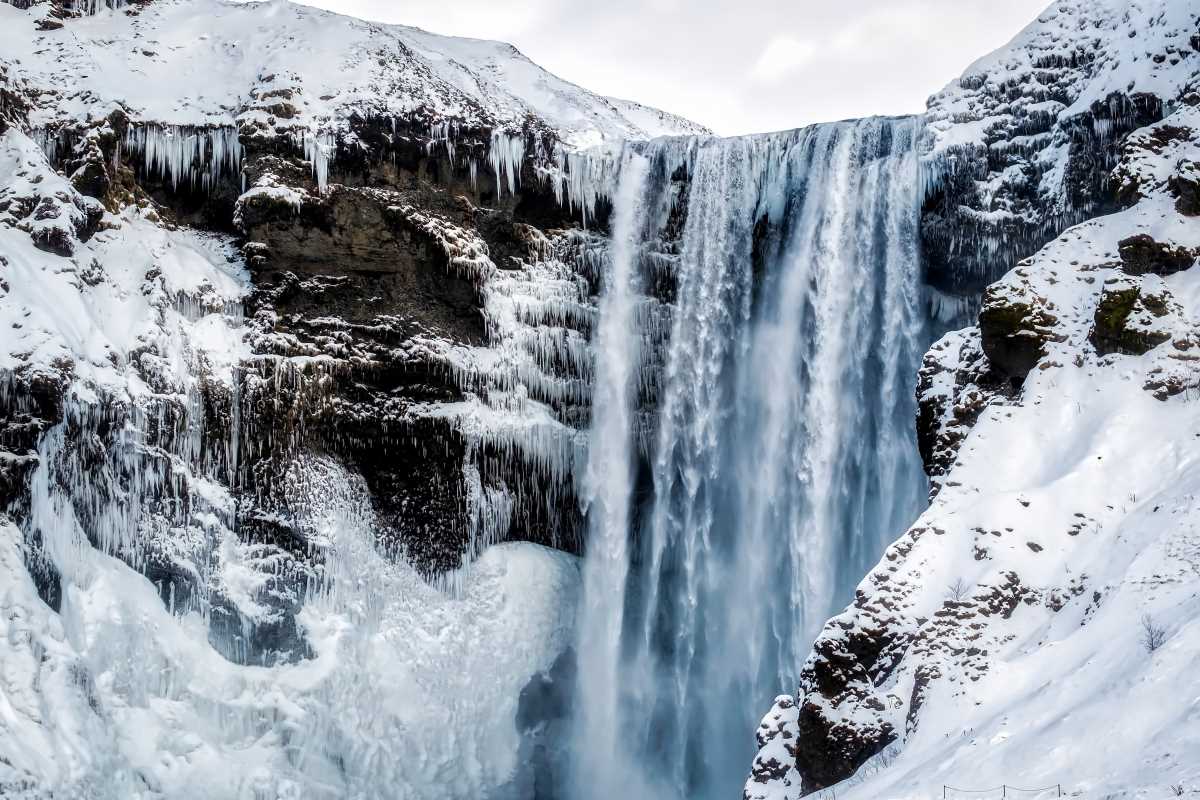
Situated along Iceland’s southern coast, Skógafoss is a broad, curtain-like torrent that plunges 60 meters (197 feet). Its iconic formation is especially striking during colder months, when ice shapes gather around the falls.
- Winter Transformation: The rocky cliff behind Skógafoss is often decorated with elaborate patterns of frost and thick icicles. The powerful water flow usually ensures that the cascade itself keeps moving, but it’s bordered by striking, icy shapes. This dramatic contrast between liquid and solid, flowing water and ice, creates a captivating winter scene.
- Visiting Tips: You can walk right up to the base to appreciate its impressive height. There’s also a staircase with more than 500 steps leading to a platform at the top, where you get an expansive view of the snowy landscape. Keep in mind the stairs can be very slippery in winter.
Goðafoss
Goðafoss, called the "Waterfall of the Gods," impresses with its wide, horseshoe shape in northern Iceland. Both its historical importance and icy winter scenery draw travelers year-round.
- Winter Transformation: Goðafoss frequently develops layers of thick ice and snow in the river below, partially freezing in the colder months. The water appears a stunning shade of blue amid the bright white snow, while the nearby lava fields are coated in winter’s blanket, creating a calm and striking landscape.
- Visiting Tips: Located conveniently off the main Ring Road, Goðafoss is accessible to visitors year-round. Viewing areas on both sides of the river provide unique and breathtaking vantage points.
Incredible Frozen Waterfalls Beyond Iceland
While Iceland offers an impressive array of icy cascades, you can find equally breathtaking sights in other frosty corners of the world.
Johnston Canyon, Canada
Nestled within Banff National Park, Johnston Canyon stands out as a favorite winter stop in the Canadian Rockies. Visitors can follow a trail with sturdy catwalks attached to the canyon’s cliffs, guiding them through a winding journey to discover incredible frozen falls along the way.
- Winter Transformation: The Johnston Canyon trail guides visitors to both the Lower and Upper Falls. In the colder months, these cascades are transformed into towering columns of shimmering blue ice. Watching climbers scale the icy surfaces adds excitement and draws onlookers, making for a memorable winter adventure.
- Visiting Tips: The pathway can get very slick in the colder months, so wearing ice cleats is highly recommended. These are easy to rent in Banff or Lake Louise. Joining a guided walk is a fantastic choice, often topped off with warm drinks along the way.
Korouoma Canyon, Finland
Set in Finnish Lapland, Korouoma Canyon stretches for 30 kilometers, offering a true haven for winter hikers and ice climbers alike. Visitors are treated to some of the continent’s most extraordinary icy retreats, renowned for their natural beauty and adventurous spirit.
- Winter Transformation: The canyon reveals more than a dozen icy cascades when temperatures drop. Of these, "The Mammoth Fall" stands out. It's a massive, glistening wall that draws explorers from far and wide. These wintry formations come in all shapes and impressive blue-and-white hues, creating a stunning backdrop for outdoor enthusiasts.
- Visiting Tips: A 5-kilometer hiking circuit guides you to the area’s three most impressive icy cascades. The route can be demanding in winter conditions, so reliable winter trekking gear is a must. You’ll find guided outings available from the nearby city of Rovaniemi.
Rifle Ice Caves, USA
In Colorado’s Rifle Mountain Park, winter creates a world of icy wonders as a network of caves and streams freezes over. Among the highlights is Koperl's Fall, where ice forms a beautiful curtain at the entrance to one of the park’s caverns.
- Winter Transformation: During the colder months, the falling water transforms into towering frozen structures, forming ice-filled caves you can carefully explore from behind. Sunlight filtering through the blue and white layers creates a magical, otherworldly glow.
- Visiting Tips: This spot has surged in popularity, so try to visit during the week for a quieter experience. The brief walk to the caves is steep and can get slick in winter. Be sure to bring microspikes for stability and safety on the trail.
Safety Tips for Visiting Frozen Waterfalls
Seeing these icy marvels up close is truly memorable, but planning ahead is important to keep your outing enjoyable and safe. Here are some essential tips to help you prepare and make the most of your experience.
- Wear Proper Footwear: Icy trails present the greatest risk. Choose sturdy, waterproof boots that offer strong grip. In most places, bringing ice cleats or microspikes is essential and shouldn’t be skipped.
- Dress in Layers: Conditions can shift in an instant. Choose a breathable base, layer with something warm like fleece or down, and finish with a shell that blocks wind and moisture.
- Stay on Marked Trails: Don't stray from the designated walkways. Snow can conceal hidden hazards like deep gaps or fragile surfaces over moving streams.
- Check Conditions: Before heading out, review the latest weather and trail updates. Park officials and local visitor centers frequently share important advisories and current trail statuses online.
- Be Mindful of Ice Fall: Keep a safe distance from the base of large icy structures, particularly when temperatures rise, since pieces can suddenly break off and tumble down.
Few sights capture the wonder of winter quite like a frozen cascade. These remarkable formations reveal the strength and artistry of the natural world, turning ordinary places into sparkling dreamscapes. Whether you're taking in the icy beauty along Iceland’s rugged shores or following a snow-dusted trail in Canada, these unforgettable scenes are sure to inspire. Pack your warmest layers and get ready to be enchanted by the serene magic of these chilled marvels.